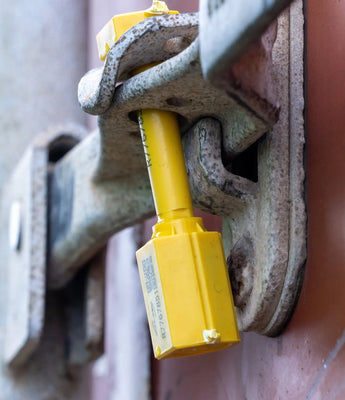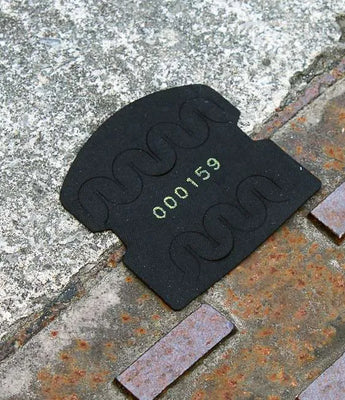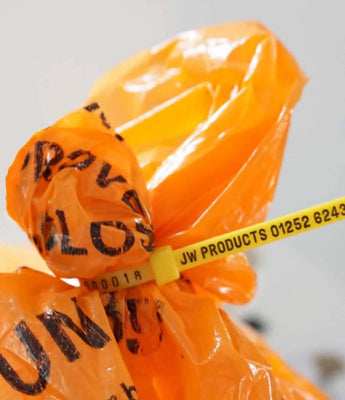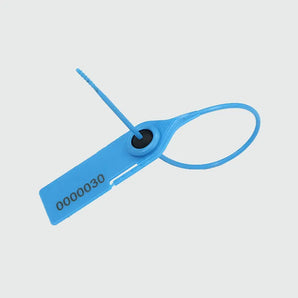
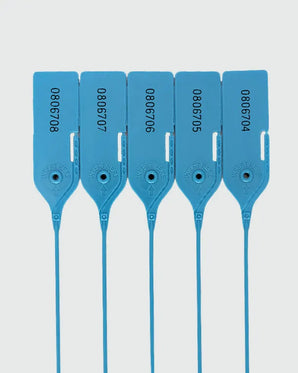
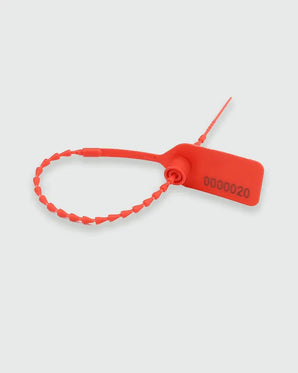
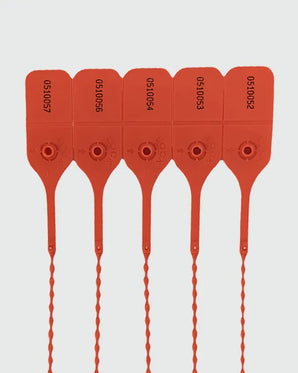
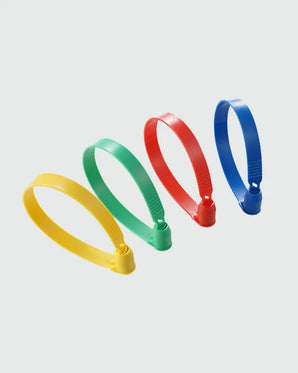
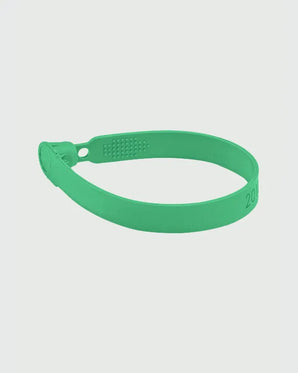
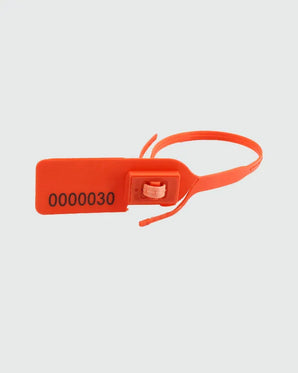
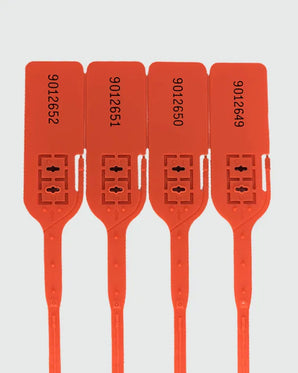
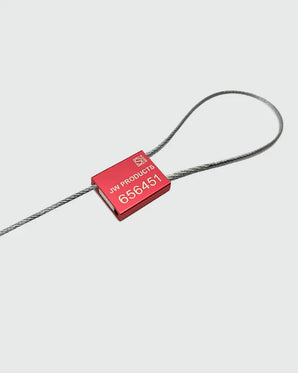
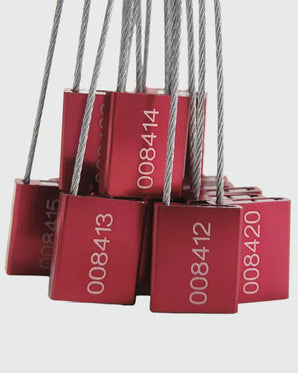
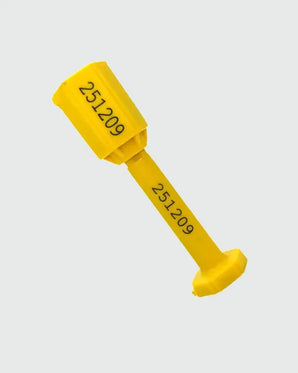
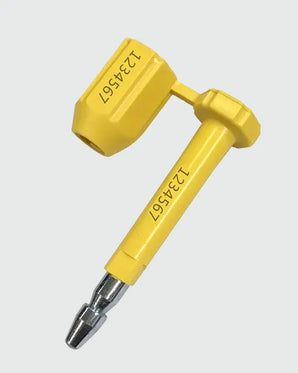
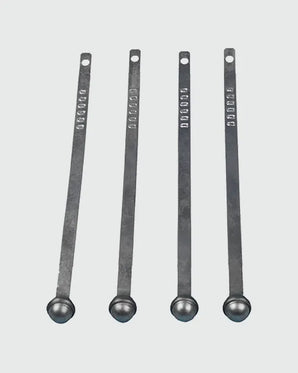
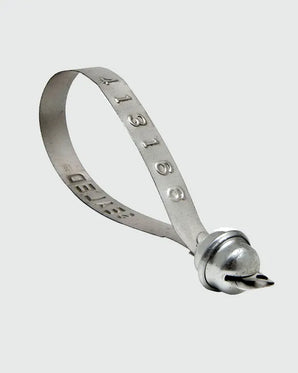
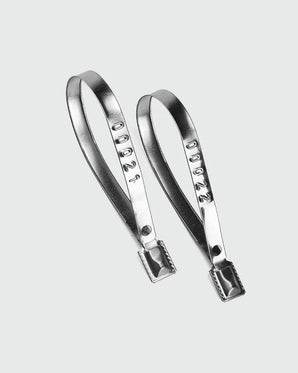
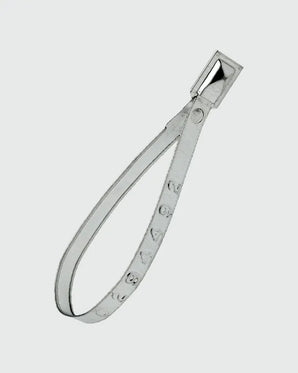
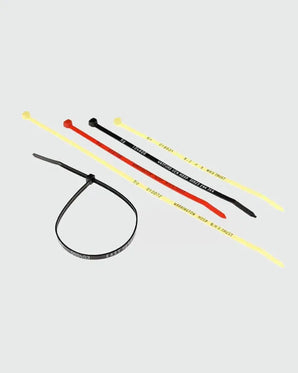
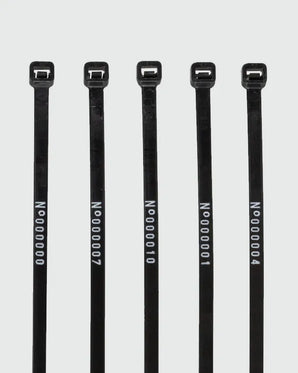
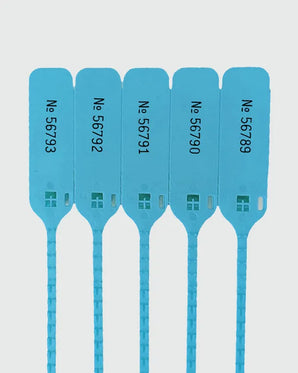
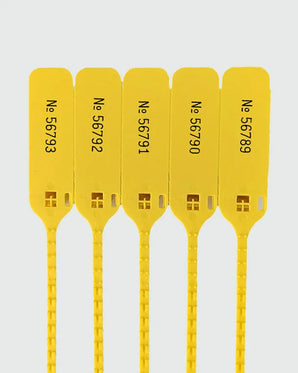

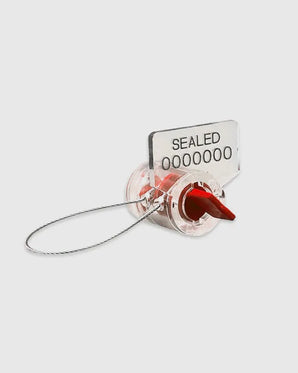
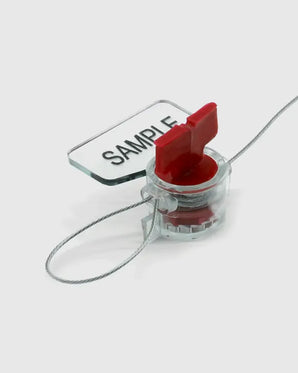
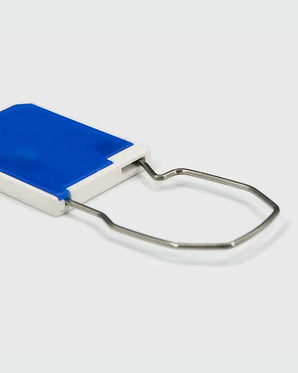
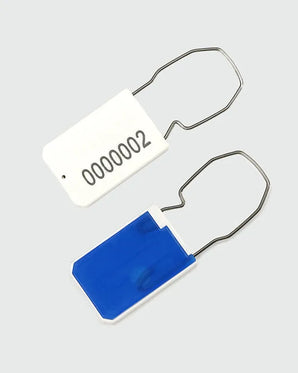



If the closure hardware takes a rigid pin and the movement calls for a high-security container seal, a bolt seal is usually where the choice starts. That is often the case on standard container doors, where operators need to check seal numbers at more than one stage.
The closure point usually narrows the choice quickly. If the hardware will not take a rigid pin, another format is often the better fit.
JW Products supplies bolt seals and other tamper-evident options for different closure points and inspection routines across transport applications.
What does a bolt seal do?
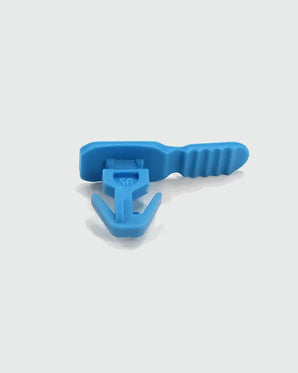
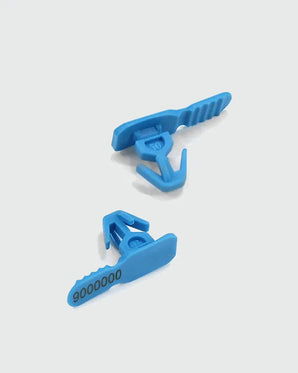
A bolt seal shows visible evidence of interference after application. Its design uses a solid pin and locking body that pass through a compatible closure point. Once applied, the seal stays in place until someone removes it.
The format suits hardware built for a rigid pin and supports visible number checks at handover.
When should you use a bolt seal instead of another seal format?
On many containerised freight movements, a bolt seal is the default starting point where the hardware takes a rigid pin. The same goes for higher-security transit work, or for any movement where the closure point takes a rigid pin and more than one handover depends on recorded seal checks.
Load value on its own is not enough to make the decision. Hardware fit and process requirements carry more weight.
Another seal format may be more suitable when the main purpose is to show access, when the closure point will not take a bolt format, or when the process does not call for a high-security container seal. In some cases, that may be a cable seal, including in higher-security applications where routing flexibility matters.
Are bolt seals used on shipping containers?
Yes. Operators commonly use bolt seals on shipping containers because they suit standard container door locking points and align with high-security freight processes. That does not make them automatic for every movement.
How do bolt seals compare with cable seals?
Bolt seals and cable seals suit different applications.
If the closure point is built for a rigid pin and the process expects a high-security container seal, a bolt seal will usually be the better fit. If the hardware needs more flexibility, or the locking point will not take a bolt format, a cable seal is often the smarter option.
The wrong choice often becomes obvious at the fitting stage. A bolt seal can be the wrong option on the wrong hardware. A cable seal can be the better answer when the opening does not suit a rigid pin or when the route through the locking point matters more than the seal body.
Need Help Choosing Between Bolt Seals and Cable Seals?
If you need to choose between a bolt seal and a cable-style format, JW Products can help. We supply bolt seals and related tamper-evident options for containerised freight, logistics checks, and wider transport applications. Request a quote to discuss the right option for your movement.
What does ISO 17712 mean for bolt seals?
ISO 17712 sets testing and classification requirements for high-security seals used in freight container applications. The standard matters when a movement, customer requirement, or supply chain security programme calls for a recognised high-security seal format.
A bolt seal does not create compliance on its own. Operators still need correct application and seal-number recording. They also need a clear response when a seal is missing or damaged.
The real question comes up early. Does the movement sit inside a process that requires a recognised high-security container seal? If it does, that requirement needs to shape the seal choice from the start.
When is a bolt seal not necessary?
A bolt seal is not always the right fit.
If the closure point does not suit a rigid pin seal, the format may be wrong from the start. If the application only needs an access indicator, another seal may do the job more effectively. In a lower-risk process with simpler checks, a simpler seal format may be enough.
The better choice is the one that fits the asset and movement cleanly. The checking process should support that choice.
What should you check before choosing a bolt seal?
Start with the hardware. If the seal will not fit the door, latch, or locking point properly, the rest of the decision does not matter much.
Then look at the movement. It may be a standard shipping container movement or another controlled freight process. The route may call for a high-security seal. Customer specifications or programme requirements may shift the choice as well.
Then look at the handover routine. Staff may need to record the seal number. More than one handover may depend on that record. The checker may need to compare the live seal against the paperwork quickly.
At that point, buyers can rule out the wrong format faster and avoid creating problems at fitting, handover, or inspection.
JW Products can help buyers compare bolt seals and cable-style security seals, along with other metal security seals formats when the application calls for a different fit.
How do bolt seals support clearer handovers in freight?
Once the format is right, handover checks become faster and easier to verify. Staff spend less time second-guessing the handover and more time deciding if the movement can proceed or the load needs closer attention.
That is one reason operators still use bolt seals widely in containerised freight.
When the closure point suits the format and the process depends on visible, recorded checks, a bolt seal makes that control step easier to apply consistently.
Speak to JW Products about bolt seals
If you need help deciding when a bolt seal is the right choice, speak to JW Products.
We can help you narrow the choice quickly and match the right seal format to the hardware and movement in front of you. View our metal security seals or request a quote to discuss the right option for your application.