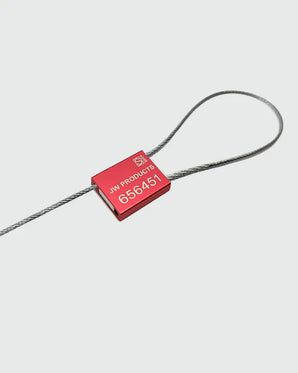
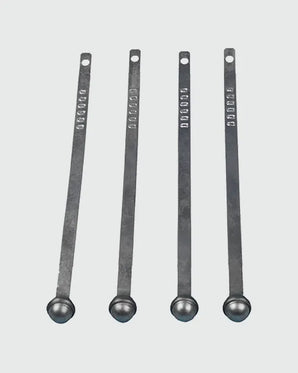
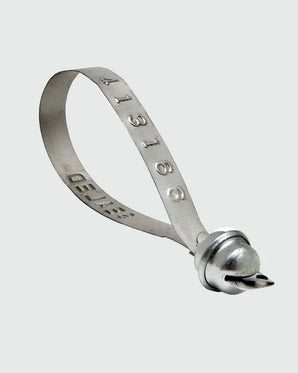
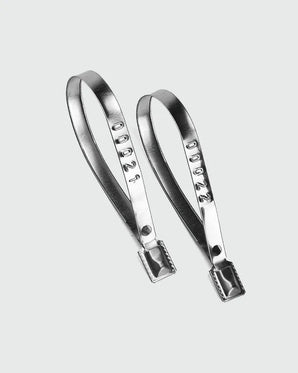
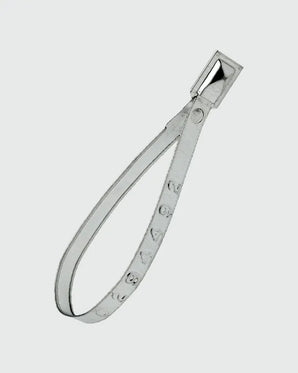

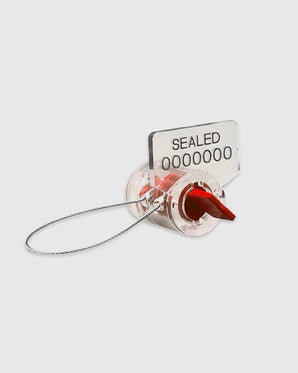
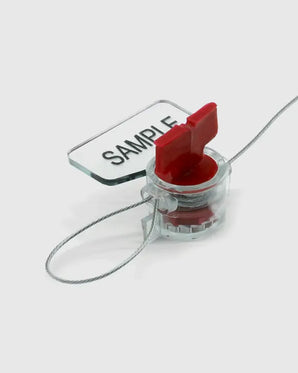



Metal cable seals can be tightened around a closure, but cutting the supplied cable shorter is a different matter. The cable in the seals discussed here is designed to unravel when cut, so any trimming needs to follow the instructions for the specific product.
Pulling the free end through the locking body reduces the loop size without changing the supplied cable length. Cutting a fitted seal for authorised removal is a separate, normal step for a single-use product.
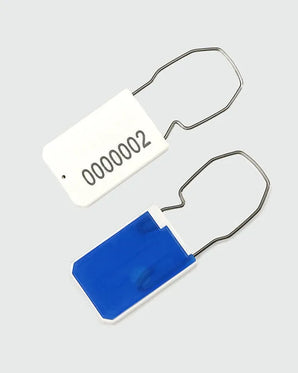
We supply cable seals in a 300 mm length and three diameters: 1.5 mm, 2.5 mm and 3.5 mm. Before ordering, check the route through the closure, the size of its opening and the room available for the locking body.
How Do Adjustable Cable Seals Work?
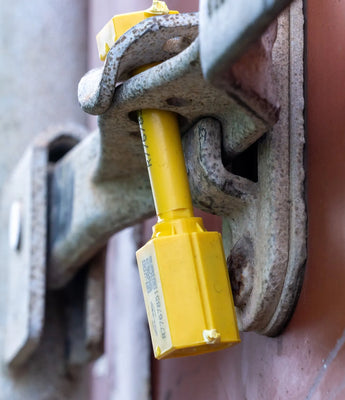
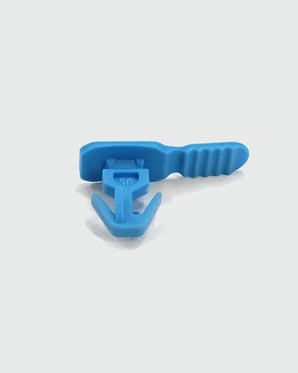
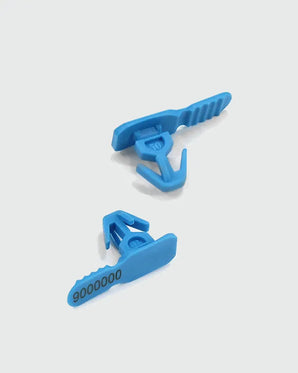
The metal cable seals we supply are tightened by pulling the free end through the locking body. Once the loop is tightened, the locking body holds the cable in place.
An opening may be wide enough for the cable but still leave too little space to position the locking body and pull the cable tight. That can make fitting and later inspection difficult.
What Happens If You Cut a Metal Cable Seal?
Adjustable cable seals can be tightened, but that does not automatically mean they can be cut shorter. The seals combine galvanised, non-preformed steel cable with an aluminium locking body. The strands unravel when cut, which can provide visible evidence of interference. Whether excess cable may be trimmed during fitting still depends on the instructions for the specific product.
Cutting a fitted seal is the normal method of authorised removal. The seal cannot be reused, so a replacement is needed after access. Where seal numbers form part of an inspection record, note the replacement identifier under the existing procedure.
The published product listing does not specify an approved method for shortening unused cable. Ask us to confirm the instructions for the relevant product and diameter before making any modification.
How Do You Measure the Right Cable Seal Length?
To choose the right length for cable seals, measure the full path through the closure and allow enough cable to feed into the locking body and engage correctly. The published 300 mm figure describes the supplied cable, not a guaranteed circumference for the fitted loop.
Check the following before ordering:
· The complete cable route: Follow the cable's path through the latch, eyelets or other access point. Measure the route rather than only the gap between openings.
· The smallest opening: Check that the selected diameter passes through every aperture along the route.
· Locking-body clearance: Allow space to position the body, tighten the seal and inspect it afterwards.
· Length for engagement: Leave enough cable to pass through the locking body and tighten according to the product instructions.
When testing a sample, thread the cable through the closure, position the locking body and tighten the seal according to the product instructions. Check engagement with a gentle pull, then make sure the seal can be inspected without obstructing normal use of the closure.
A successful trial checks practical compatibility. It does not verify the stated breaking strength or the seal’s overall security performance.
Before placing a larger order, request a free tailored sample pack to check the fit on the actual closure. Tell us about any difficulty with routing or tightening the cable, and we can help assess the available configuration.
How Can You Tell If a Cable Seal Is Too Long or Too Short?
A cable seal is too short when it cannot follow the full route through the fixing points and still feed far enough into the locking body to tighten securely. Reaching the last opening is not enough if there is too little cable left to engage the lock.
Extra cable beyond the locking body is a different issue. A visible free end does not automatically mean the seal is too long. Check that the body sits where it can be inspected and that the remaining cable stays clear of moving parts and equipment it could catch on during normal use.
The fitted result matters more than the amount of cable left over. The closure should operate as intended, and the seal should be easy to inspect. Do not trim the excess unless we have confirmed the permitted method for the specific product and diameter.
What Cable Seal Diameter Do You Need?
Start with the smallest opening the cable must pass through, then consider the breaking strength required for the application. The available diameters are 1.5 mm (330 kg), 2.5 mm (500 kg) and 3.5 mm (1,250 kg).
These are manufacturer-published ratings, not guarantees of performance under every installed condition. Diameter affects which openings the cable can pass through, while the 300 mm supplied length affects the route it can take to the locking body.
Can the Same Cable Seal Size Be Used for Different Closures?
Choosing cable seals for different closure sizes means checking each type of fixing point rather than relying on one successful fit. Using the same specification across several access points can simplify purchasing and stock control, but only once that configuration has been checked against the closures in use.
Group the fixing points by opening size, cable route and room for the locking body. Two cabinet doors may accept the same diameter but require different routes through their fixings. A valve closure may have enough room for the cable while leaving less space to tighten the lock. The shared 300 mm cable length does not establish that every fitting will be suitable.
During sample fitting, record which diameter and configuration works on each closure type, along with any difficulty applying or inspecting the seal. For teams buying across several buildings or sites, these notes provide a more useful basis for quantities than assuming a successful trial on one closure applies to all.
What If a 300 mm Cable Seal Doesn't Fit Your Closure?
A 300 mm cable will not suit every closure, and trimming should not be treated as the default fix. Contact our team with the closure type and any dimensions you have. We can help identify what else needs checking.
You do not need a complete specification to get in touch. A description of the closure and the route the cable must follow is a useful starting point. The current product listing does not advertise other stocked lengths or a custom-length service.
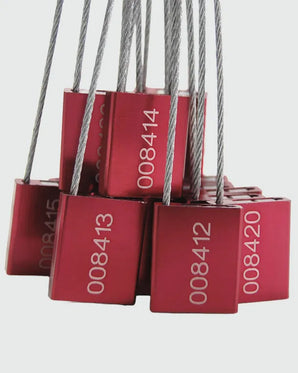
Once the seal specification is established, we can discuss stock numbering and custom-printed options, including branding and barcodes where available for the selected product.
Stock-numbered and custom-printed cable seals have different lead times. Share your required delivery date with us, particularly for custom-printed orders, so we can confirm availability and production timing before you order.
Choose the Right Cable Seal Before You Order
A cable seal should suit the closure from the outset. Request a quote from JW Products with the dimensions you have, the quantity required and your delivery date. We'll help confirm any outstanding measurements, compare the available specifications and discuss numbering, custom printing and supply arrangements.